Split into fragments
- Gait assayGait score
- Pain testWithdrawal threshold
- Social testInteraction time
One assay, one focus, one outcome. Each test needs its own cohort and handling, and the results rarely line up.
Blackbox Bio
Why It Matters
We're building one for behavior, and putting it in every lab.
17th–19th century
Lenses revealed a hidden world of cells and microbes. As microscopes spread through laboratories, they made it possible to see the causes of disease.
1977 – today
Reading DNA went from a heroic effort to a routine assay, and the cost of a human genome fell from about $100 million to well under $1,000.
Now
Computer vision and machine learning make behavior measurable at scale.
The Problem
That's how most labs still study behavior. The work is subjective, slow, and expensive, and the data is noisy, fragmented, and hard to reproduce, which holds back discovery.
One assay, one focus, one outcome. Each test needs its own cohort and handling, and the results rarely line up.
From Darwin to the ethologists who shared the 1973 Nobel Prize, the field was built on careful observation. But scoring by hand is slow, varies between observers, and misses changes too subtle or too fast to catch.
The Blackbox way
Every dimension of behavior comes from a single session, with no extra assays, cohorts, or handling.
Same video in, same ethogram out. And machine learning measures what the eye can't, from the frequency of a tremor to the force of every footfall.
Our Approach
We borrow our words from Aristotle, who wrote of an agent's character (Ethos), what it undergoes (Pathos), and the proportions that govern its movement (Logos), and of the story its actions weave (Mythos). Seen together, they make the agent clear (Safos).
Between them, they cover every aspect of behavior.
Ethosἦθος
Pathosπάθος
Logosλόγος
Mythosμῦθος
Safosσαφής
Action · Behavior scoring
Computer vision segments a recording into labeled behaviors such as grooming, rearing, and scratching, frame by frame.
Condition · Frequency & dynamics
Frequency-domain analysis detects the signatures of abnormal internal states such as tremor, seizure, and agitation.
Structure · Gait, posture & biomechanics
Paw-contact and pose data reveal stride symmetry, interlimb coordination, body angles, and weight distribution.
Narrative · Behavior in context
Multi-animal ethograms and exploration tracking reveal how animals interact with each other, and what they learn to seek out or avoid.
Safos combines all four modalities into one state, moment by moment, across a whole session.
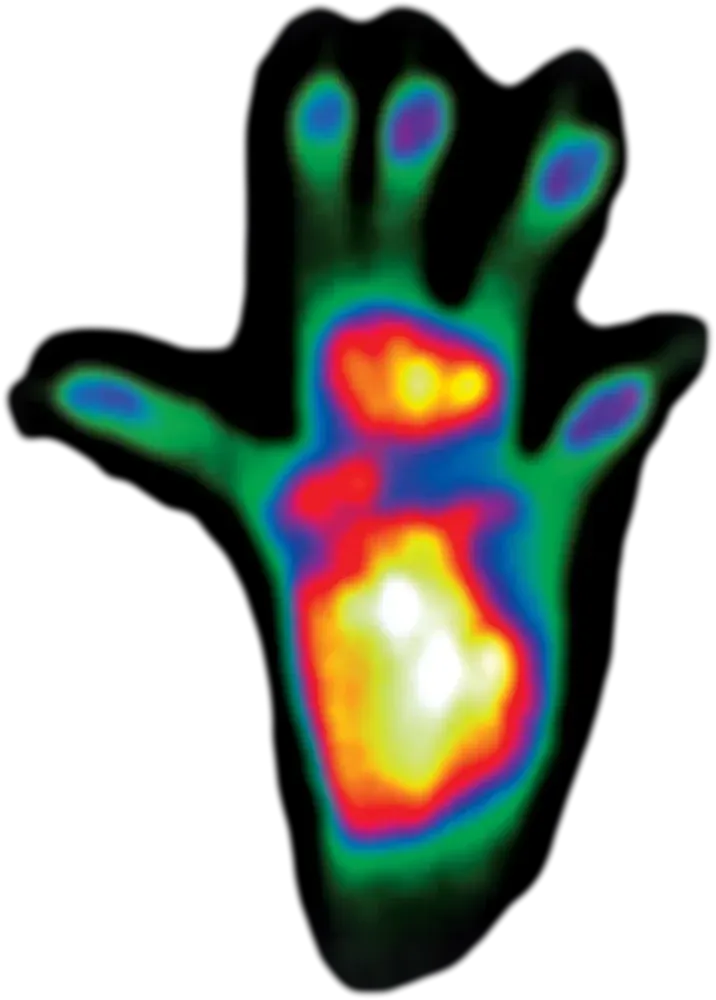
Palmreader™ Safos
Coming soonThe Blackbox way
Every recording
Four modalities
One comprehensive view
We are transforming rodent behavior screening by partnering with researchers to deliver automated, high-throughput behavioral analysis that enables deeper insights and more reproducible results. Contact us to learn how Blackbox can support your lab.